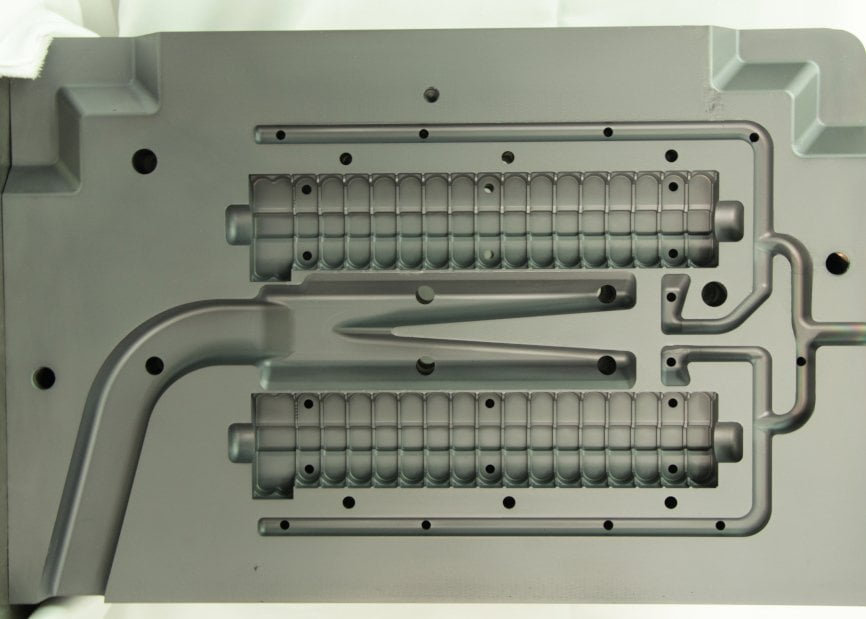
In heat work mold applications where high temperatures and pressures such as metal injection, extrusion, and hot forging are formed, wear mechanisms due to high temperature are dominant.
Mainly, thermal fatigue, stress cracks, erosion, oxidation, heat corrosion and damage due to the formation of adhesion and intermetallic compounds as a result of reactions happening between liquid metal and mold steel, occur. In order to prevent these factors, the coating to be applied is expected that it has a particularly high temperature resistance, and that it has a thermal barrier effect that will prevent the steel from overheating, and that it creates an inert and stable intermediate surface that will prevent adhesion and surface reactions between the liquid metal and mold steel, and that it forms a hard and abrasion resistant filling layer that can prevent fatigue cracks, as result of pressure, and surface erosion as well.
General wear-damage mechanisms occurring in heat work mold parts and coating qualities that should be preferred according to these mechanisms are summarized in the side-table.
| Failure mechanism | Predominant property expected from the coating | |
|---|---|---|
| Surface cracks due to thermal fatigue |  | High hardness, toughness and oxidation resistance |
| Adhesive wear (Liquid metal adhesion, formation of intermetallic compounds in surface) |  | Low friction co-efficient, high oxidation resistance, chemical stability |
| Erosion, oxidation and corrosion |  | High heat hardness, high oxidation resistance, chemical stability |
| Hardness loss and mass damage in mold steel as a result of high temperature |  | Selecting the appropriate heat work steel before coating and performing the correct heat treatment |


